What is Trade-Based Money Laundering (TBML)?
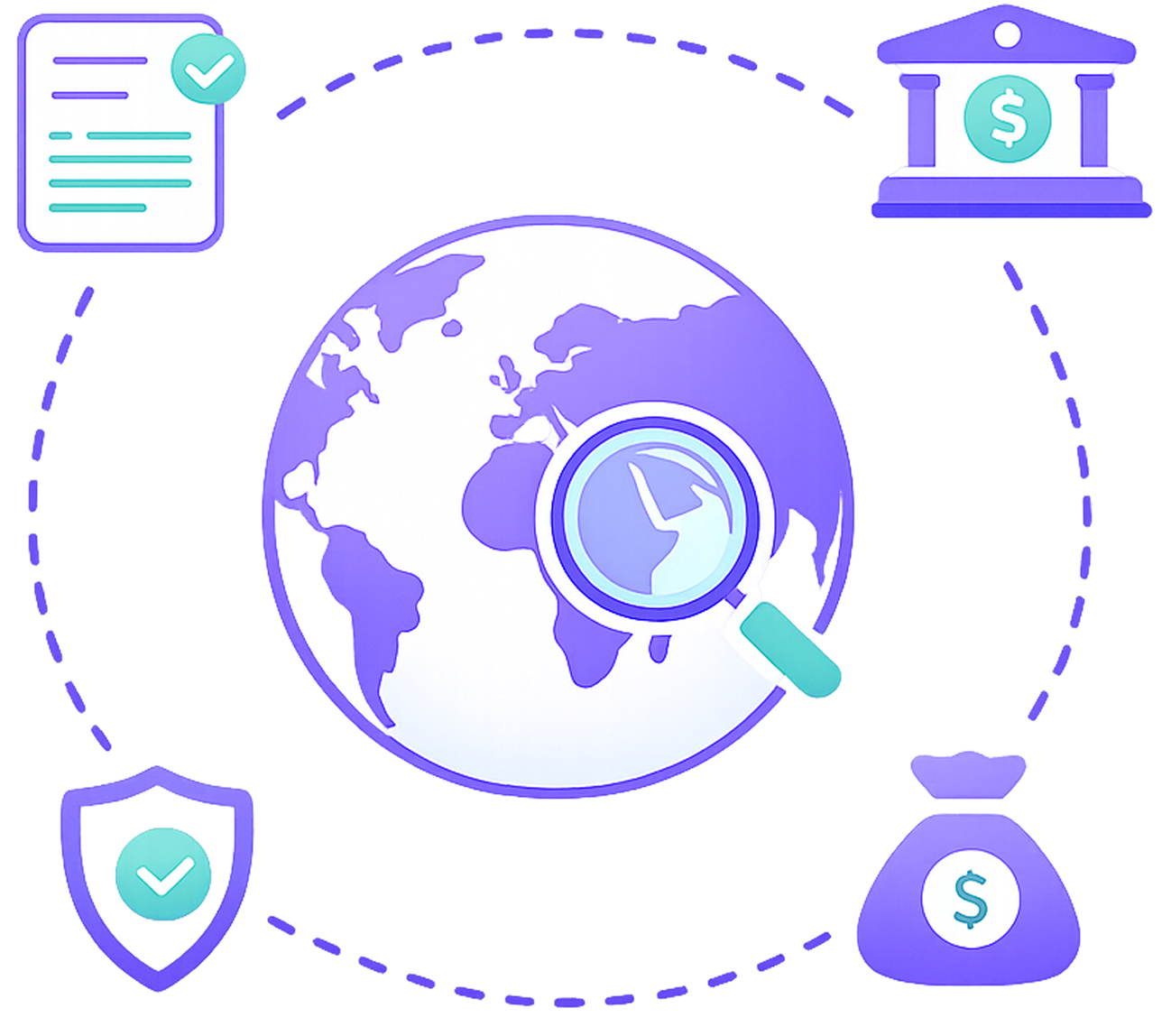
TBML refers to the process by which criminals use international trade transactions to move illicit money across borders, making it difficult for authorities to detect and trace. Unlike traditional money laundering methods that rely on financial institutions, TBML exploits the intricacies of cross-border trade, where over-invoicing, under-invoicing, false documentation, and misleading product descriptions are commonly used to hide the movement of funds. Criminals typically leverage misleading trade documents to misrepresent the value or quantity of goods traded, allowing them to move illicit funds without raising red flags for regulatory bodies. In the process, trade finance professionals, banks, and regulatory authorities are often unaware of the illicit activity until it's too late.Why Is TBML a Growing Concern in the MENA and APAC Regions?
- Increasing Trade Volume in MENA and APAC
- Diverse and Evolving Regulatory Frameworks
- Lack of Transparency in Cross-Border Trade
The Scale of the TBML Problem: A Global Perspective
While TBML is a problem worldwide, the impact is particularly acute in emerging markets like MENA and APAC. According to a report by Trade Finance Global, TBML accounts for up to $1.6 trillion in illicit financial flows globally each year—representing a significant chunk of money laundered through the trade system. In the MENA region, interpol reports that the amount of illicit funds laundered via trade is often much larger than the volume of money funneled through traditional banking channels. This is particularly concerning given that the region's strategic position as a trade hub makes it more susceptible to TBML-related risks. Similarly, in APAC, countries like India and China are prime candidates for TBML due to their size, volume of exports, and rapidly growing economies. In a report by the Asian Development Bank (ADB), it was estimated that illicit trade in Asia is worth over $2.5 trillion annually, with a significant portion of this linked to TBML.The Technology Gap: Why Compliance Needs Innovation
As TBML becomes more sophisticated, the traditional methods of identifying and mitigating financial crime are increasingly ineffective. In response, compliance programs in both MENA and APAC are turning to advanced technologies like artificial intelligence (AI), machine learning (ML), and blockchain to streamline trade monitoring and improve the detection of fraudulent activities. Arun Krishnamoorthy, Business Sales Director, at Traydstream highlights the importance of technology in modern trade finance compliance: "With trade finance becoming increasingly digital and complex, it’s crucial to have tech solutions that can automatically flag discrepancies and red flags across trade documentation. These systems can also integrate seamlessly with cross-border regulatory frameworks, enabling real-time, scalable compliance without the bottlenecks of traditional manual processes." AI and ML-driven platforms can automate document verification, identify inconsistencies in invoices or shipment records, and track irregular trade patterns, which can be difficult for human analysts to detect in real-time. By leveraging AI, trade transactions can be recorded on an immutable ledger, ensuring full transparency and traceability from one end of the supply chain to the other.Why TBML is a Priority for MENA and APAC Trade Finance Leaders
For senior trade finance professionals and technologists in the MENA and APAC regions, addressing TBML is no longer a choice—it’s an imperative. Governments and regulators are tightening rules, and financial institutions are under increasing pressure to ensure that their trade finance operations are compliant with global standards like those set by the FATF. As trade volumes continue to grow, especially with the integration of new trade agreements and digital trade channels, it will be essential for institutions in MENA and APAC to leverage technology to combat TBML effectively.Call to Action
The fight against TBML requires collaboration between trade finance professionals, regulators, and tech innovators. For businesses in MENA and APAC, the first step is to evaluate their existing compliance frameworks and identify areas where technology solutions can provide immediate impact. If you're a senior professional in trade finance or technology, stay tuned for our upcoming blogs on how AI and other innovations are shaping the future of TBML compliance in these regions.