Recent momentum around the EU–Australia trade agreement highlights a broader shift in how global trade is evolving. Markets are opening in new directions, supply chains are becoming more diversified, and institutions are managing an increasing mix of regulatory requirements and documentation standards across jurisdictions.
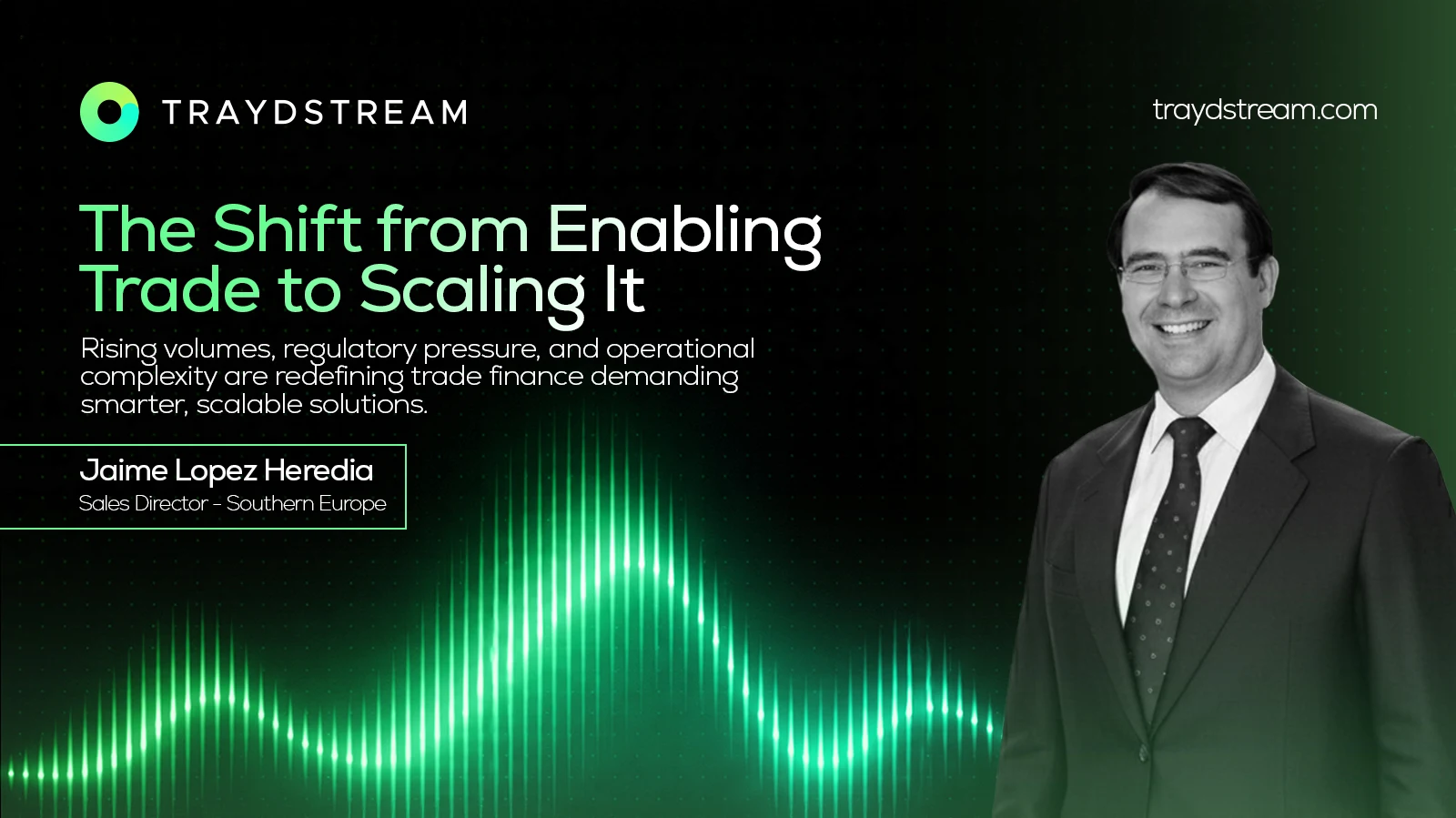
As Jaime Lopez Heredia recently noted:
“The EU–Australia trade agreement is a clear signal of where global trade is heading: more partnerships, diversification and complexity. As new trade corridors open, regulatory and compliance demands will only increase — and that’s where technology becomes critical. The question is no longer about enabling trade, but about scaling it efficiently.”
This is the defining challenge facing trade finance today.
Complexity is Rising — But So is Opportunity
Expanding trade corridors are unlocking growth opportunities across regions and industries. However, they also introduce new layers of complexity:
- Increased documentation requirements across jurisdictions
- Greater regulatory scrutiny and compliance expectations
- Higher transaction volumes without proportional increases in operational resources
- Demand for faster turnaround times and improved client experience
Traditional manual processes are no longer sufficient to support this scale. Institutions must manage greater volumes of trade data while maintaining consistency, accuracy, and auditability.
Technology as the Scaling Layer
To support sustainable growth, banks and corporates need infrastructure that allows them to process more trade, more efficiently, without increasing risk exposure.
Digitisation and intelligent automation enable institutions to:
- Streamline document checking and reduce manual intervention
- Embed compliance controls directly into workflows
- Improve processing speed and accuracy
- Increase operational capacity without increasing headcount
- Gain visibility into trade data for better decision-making
Enabling Scalable Trade with Traydstream
Traydstream helps financial institutions adapt to this new landscape by digitising and automating trade finance processes across the transaction lifecycle.
Solutions including TraydCheck, TraydConnect, TraydAnalytics and TraydFX help banks and corporates reduce friction in trade workflows while maintaining strong compliance oversight. By transforming complex documentation into structured, actionable data, institutions can manage higher volumes of transactions with greater confidence and efficiency.
The Future of Trade is Scalable
As global trade continues to diversify, the ability to scale efficiently will become a key competitive differentiator. Institutions that invest in digital trade infrastructure today will be best positioned to support clients, capture growth in new corridors, and navigate regulatory complexity with confidence.
The direction is clear: enabling trade is no longer enough. The priority now is enabling trade to scale.