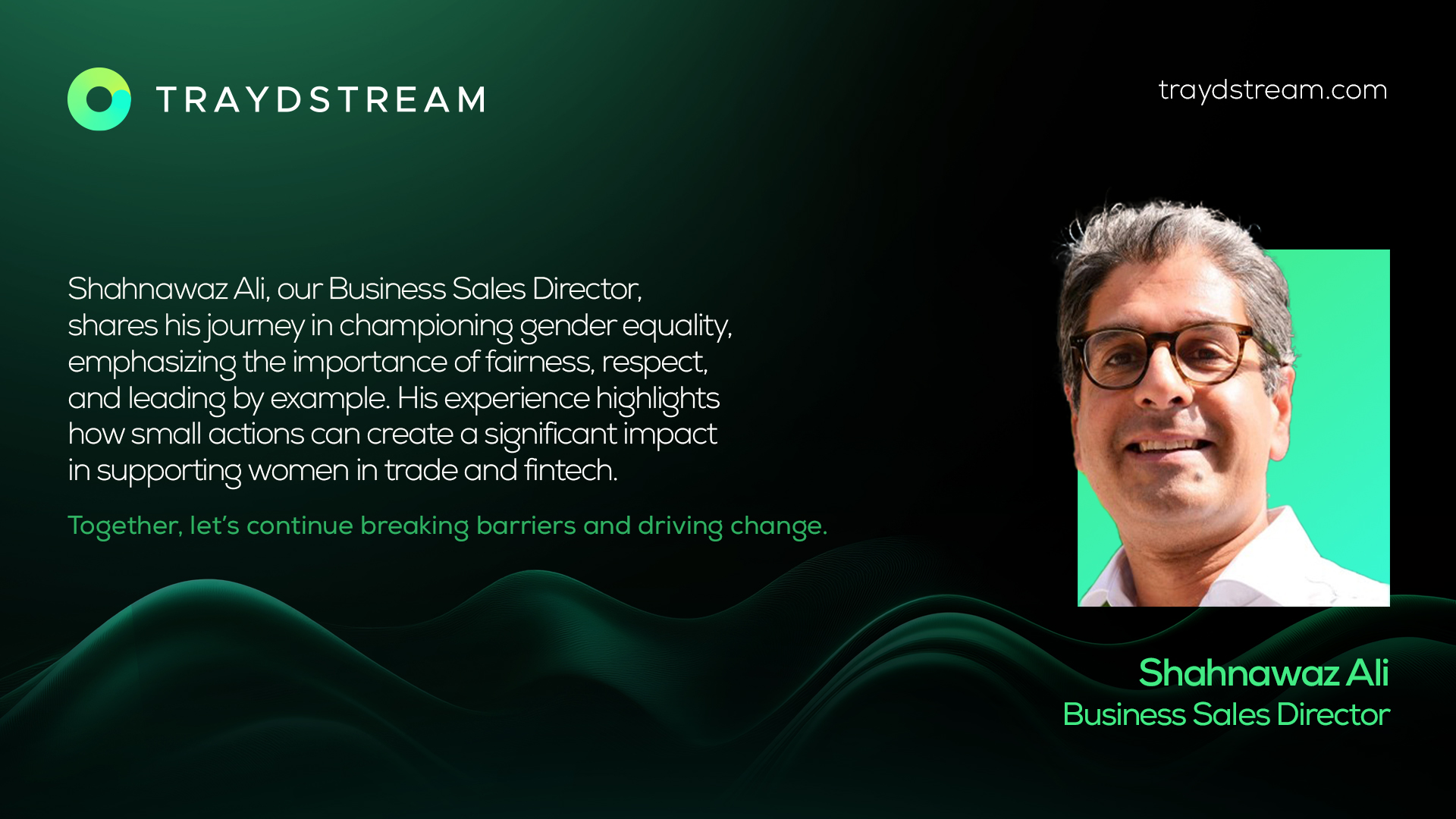
1. Introduction
- Can you briefly introduce yourself and your role at Traydstream?
I have been a part of the Traydstream DNA for the past 3+ years. I have previously held the role of head of client success responsible for the roll outs of mandates such as Deutsche Bank and Citi. I am currently a part of the Sales team focusing on growing our business in North America together with Asif Ali.
2. The Challenge
- Can you share a time when you supported or championed gender equality in the workplace?
In my previous role while heading the client success team, one of my colleagues was helping me directly support the roll out of Duetsche bank implementation. The colleague was disciplined and hardworking and took every bit of effort to make sure the client is not disappointed. This account was and is very stressful as client expectations are high. We had some instances where some of the other colleagues unfairly treated her. I had to work with both the parties to mediate and help them understand the context and ease the friction.
3. The Message
- What advice would you share with men about supporting women in trade and fintech?
- Why do you believe men play a crucial role in advancing gender equity?
I personally am a firm believer that Gender should not create any differentiating factor. We are all humans and should be treated as such with fairness and equality. As long as we take ownership and deliver what’s expected, regardless of gender, fairness should prevail.